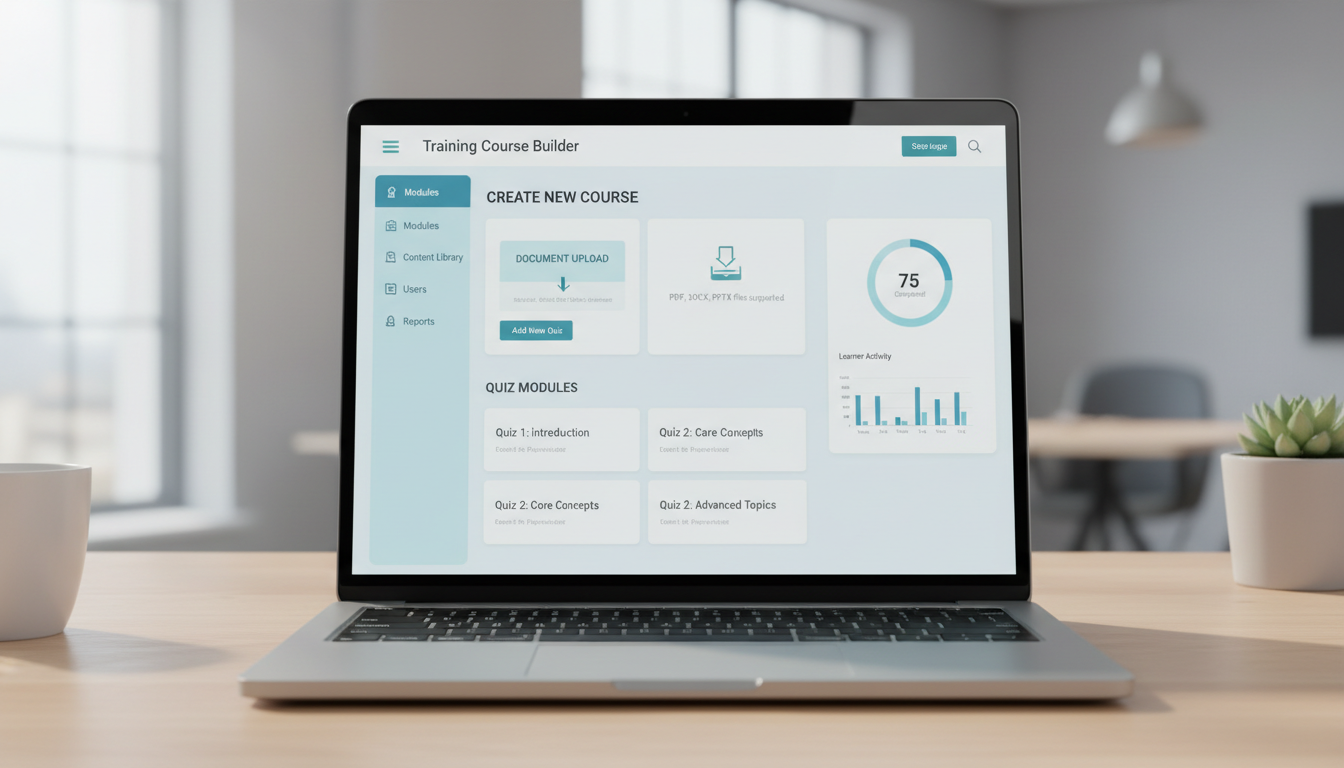
Transforming a property management employee handbook into an active training system requires breaking down static policies into structured, role-specific learning modules with clear performance goals. By integrating interactive onboarding and regular compliance checks, firms can ensure high completion rates and consistent operational standards across their teams; this strategic shift also helps lower employee turnover in the long run.
Most property management offices have a dusty, three inch binder sitting on a shelf that no one has touched since their first day. You spent dozens of hours compiling every SOP and legal requirement; yet, your team still calls you with basic questions every hour. This gap between documentation and execution is where operational efficiency goes to die. If your handbook remains a static document, it is a liability rather than an asset. This guide provides a sophisticated roadmap to transform those dormant files into a dynamic, AI driven training system. We will explore how to audit your existing manuals, convert them into interactive mobile courses, and use automated progress tracking to slash turnover. By the end, you will know exactly how to turn your institutional knowledge into a scalable engine for property management success.
The Three Inch Binder Problem: Why Most Property Management Handbooks Fail
Most property management firms in Central Oklahoma spend months perfecting a property management employee handbook only to watch it collect dust on a shelf or sit unopened in a digital folder. This is the Three Inch Binder Problem. It represents a significant investment in compliance that rarely translates into operational excellence or consistent performance.
In the fast paced world of multifamily housing, managers are often too busy putting out fires to mentor a new hire properly. This leads to passive training, where a new leasing agent is handed a 100 page PDF and told to read it between tours. This information overload creates immediate friction. When employees feel overwhelmed and undersupported, they are far more likely to leave within the first 90 days. This attrition is a major drain on profit; the cost of replacing a single site manager includes lost productivity, marketing for the role, and significant recruitment fees.
For firms in Norman managing portfolios across geographically distributed complexes, these challenges are amplified. You cannot be at every property simultaneously to ensure a new maintenance tech understands specific key control procedures. Without a system to convert your documentation into an automated employee training experience, your handbook remains a static barrier rather than a functional guide that builds confidence in the field.
Essential Components of a Property Management Employee Handbook
To bridge the gap between a dusty binder and a high performing team, your documentation must evolve from a legal disclaimer into a functional training manual. While a legal policy document focuses on liability and HR rules, a functional manual focuses on execution. It tells the employee exactly what to do when a pipe bursts at 2:00 AM or how to handle a difficult tenant interaction while remaining compliant with Fair Housing laws.
A comprehensive property management employee handbook should be structured around the 5 P's of property management:
People: Focus on tenant relations and Fair Housing compliance to ensure ethical, legal interactions.
Property: Detail key control procedures and preventative maintenance schedules to protect physical assets.
Process: Outline standard workflows for leasing, rent collection, and eviction procedures.
Profit: Explain how individual actions, such as reducing turnover or managing vendor costs, impact the bottom line.
Portfolio: Establish consistency across different locations; this ensures a tenant in Norman receives the same service level as one in a neighboring city.
Beyond these high level categories, your AI training platform must house specific, tactical modules. These include emergency maintenance protocols, move in and move out inspection checklists, and clear guidelines for key and access control. By organizing your manual this way, you provide a clear roadmap that moves beyond what not to do and teaches staff exactly how to excel in their roles. This transformation allows you to convert your documentation into a resource that actively builds employee confidence from day one.
Step 1: Auditing Your SOPs and Manuals for AI Conversion
Moving from a conceptual manual to a functional AI training platform starts with a rigorous audit of your current assets. Most firms possess a collection of property management employee handbook PDFs or Word documents that serve as legal cover but fail as instructional tools. The goal of this audit is to shift from explaining what the policy is to demonstrating how the task is performed.
Review your documents for dense paragraphs that bury the lead. A three paragraph explanation of Fair Housing compliance is a legal policy; a step by step guide on how to greet a prospect and which specific questions to avoid is an SOP. When you prepare to convert your documentation into digital modules, focus on breaking down these walls of text into logical, sequential actions.
Look for specific gaps in high stakes workflows such as rent collection and leasing procedures. Ask if a new hire could follow the text to complete a task without outside help. Common omissions include the exact steps for processing partial payments in your accounting software or the specific communication chain for weekend emergency maintenance. Identifying these friction points now ensures your automated employee training addresses real world scenarios rather than just theoretical rules. This clarity prevents the AI from inheriting and magnifying existing procedural ambiguities.
Step 2: Transforming Static Documents Into Interactive AI Courses

Once your SOPs are audited and ready, the traditional hurdle is the time required to build training materials manually. Creating PowerPoint decks or filming instructional videos can take weeks of administrative time that most property managers in Norman simply do not have. LeaseLaunch eliminates this bottleneck by allowing you to convert your documentation instantly.
By uploading your property management employee handbook and related SOP folders, the AI training platform automatically parses the text to generate structured courses. This process identifies core competencies and organizes them into logical learning paths, transforming a static wall of text into an interactive experience. Unlike a manual slide deck that requires a total overhaul every time a policy changes, this system remains flexible. When you update a procedure, the AI adapts the training content to match, ensuring your team never learns from obsolete materials.
The system goes beyond simple organization; it powers an AI knowledge assistant dedicated to your specific firm. If a leasing agent needs to verify the specific criteria for a security deposit refund while the manager is off-site, they can query the assistant directly. The AI provides answers grounded strictly in your company’s policies, which prevents staff from guessing or relying on outdated information. This automated employee training environment shifts the burden of knowledge retrieval from the supervisor to the system, ensuring that your internal expertise is always available at the point of need.
Step 3: Implementing the 5 C's of Employee Onboarding via Mobile Training
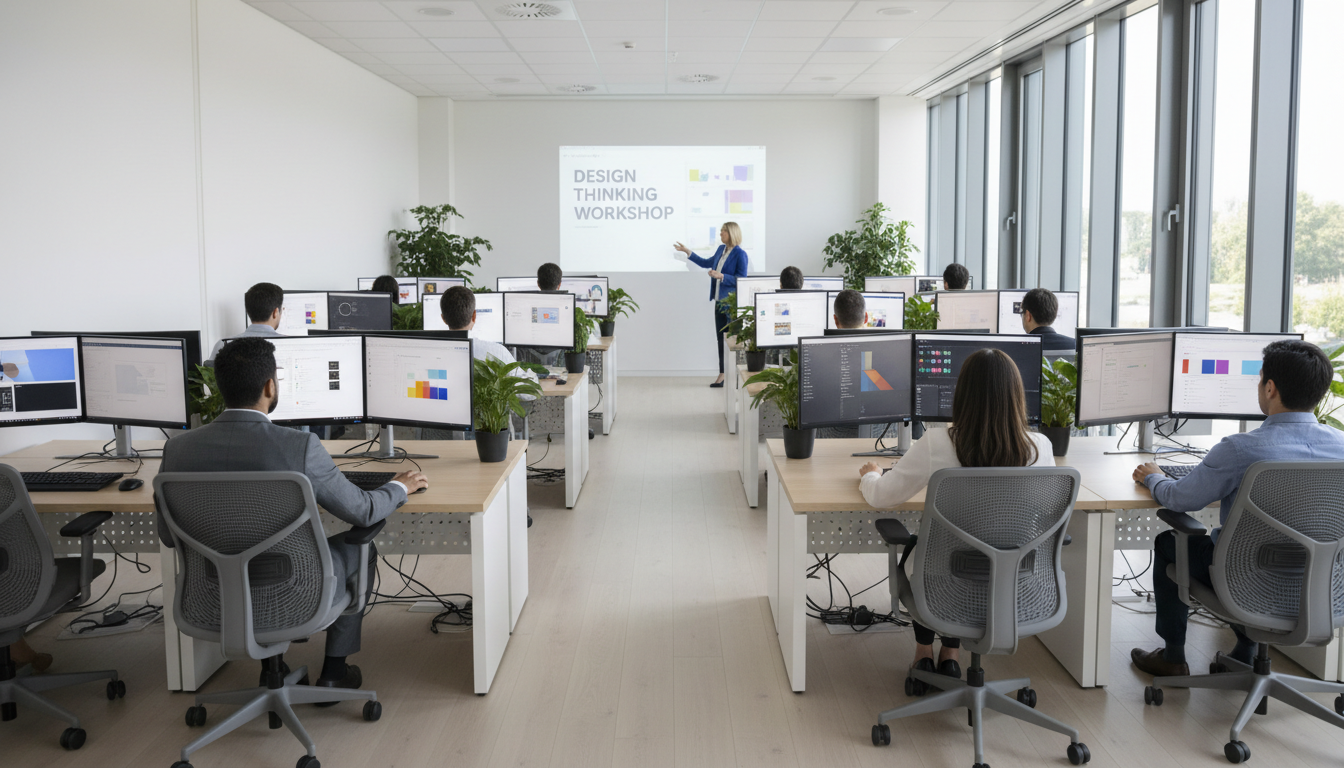
Effective onboarding in property management relies on the 5 C’s: Compliance, Clarification, Culture, Connection, and Confidence. While a traditional property management employee handbook often stops at compliance, an automated employee training system weaves all five elements into a cohesive 30 day timeline. Confidence, the most critical factor for early retention, is built when a new hire knows exactly where to turn for answers. By using an AI training platform to define a clear learning path, you remove the "sink or swim" anxiety common in multifamily roles.
Training must happen where the work happens, not just in a back office. For on site maintenance teams in Norman or leasing agents touring properties, mobile access is non negotiable. A maintenance technician should not have to return to the leasing office to check a specific water shut off protocol in a three ring binder. Instead, they can convert your documentation into mobile modules accessible from their smartphone while they are standing in front of the equipment. This immediacy transforms the handbook from a static reference into a live tool that reinforces culture and clarification in real time. Providing these resources directly in the field ensures that employees feel connected to the company’s standards, even when they are working independently across a distributed portfolio.
How Quizzes and Progress Tracking Reduce Property Management Turnover

Accountability serves as the vital link that most traditional manuals lack. A firm can convert your documentation into digital format, but without validation, there is no proof that a leasing agent understands the legalities of an eviction notice or the precision required for a move in inspection. When you move beyond a static property management employee handbook, you introduce automated assessments that force active engagement. These quizzes act as a safety net; they verify that critical tasks are understood before an employee represents your firm in a high stakes situation.
The admin dashboard provides real time visibility into this process, which is especially critical for firms managing dispersed assets across Oklahoma. Rather than waiting for a tenant complaint or a compliance violation to signal a problem, managers can monitor progress remotely. If an employee repeatedly fails a module on Fair Housing or security deposit handling, the AI training platform flags this lag. This allows for targeted intervention and additional support before a minor misunderstanding turns into a costly legal error. By providing this structured automated employee training and clear feedback loop, you reduce the frustration that leads to early attrition. Employees who feel competent and supported are significantly less likely to contribute to the industry's high turnover rate.
Automating Refresher Training for Long Term Compliance
Compliance in property management is not a static milestone; it is a moving target. Laws governing Fair Housing, emotional support animals, and eviction procedures evolve at the state and local levels, meaning a property management employee handbook finalized last year may already be legally precarious. Relying on an HR manager in Norman to manually track certification dates in a spreadsheet often leads to oversight, which creates significant liability for the firm.
An AI training platform solves this by scheduling recurring modules automatically. Instead of one-time onboarding, the system uses automated employee training triggers to push refresher courses every twelve months or whenever a policy update is detected. When you convert your documentation through LeaseLaunch, the system tracks individual completion dates and sends proactive reminders to staff members. This ensures that a senior leasing agent is just as current on new regulations as a recent hire, maintaining a uniform standard of risk management across your entire portfolio without manual administrative intervention.